
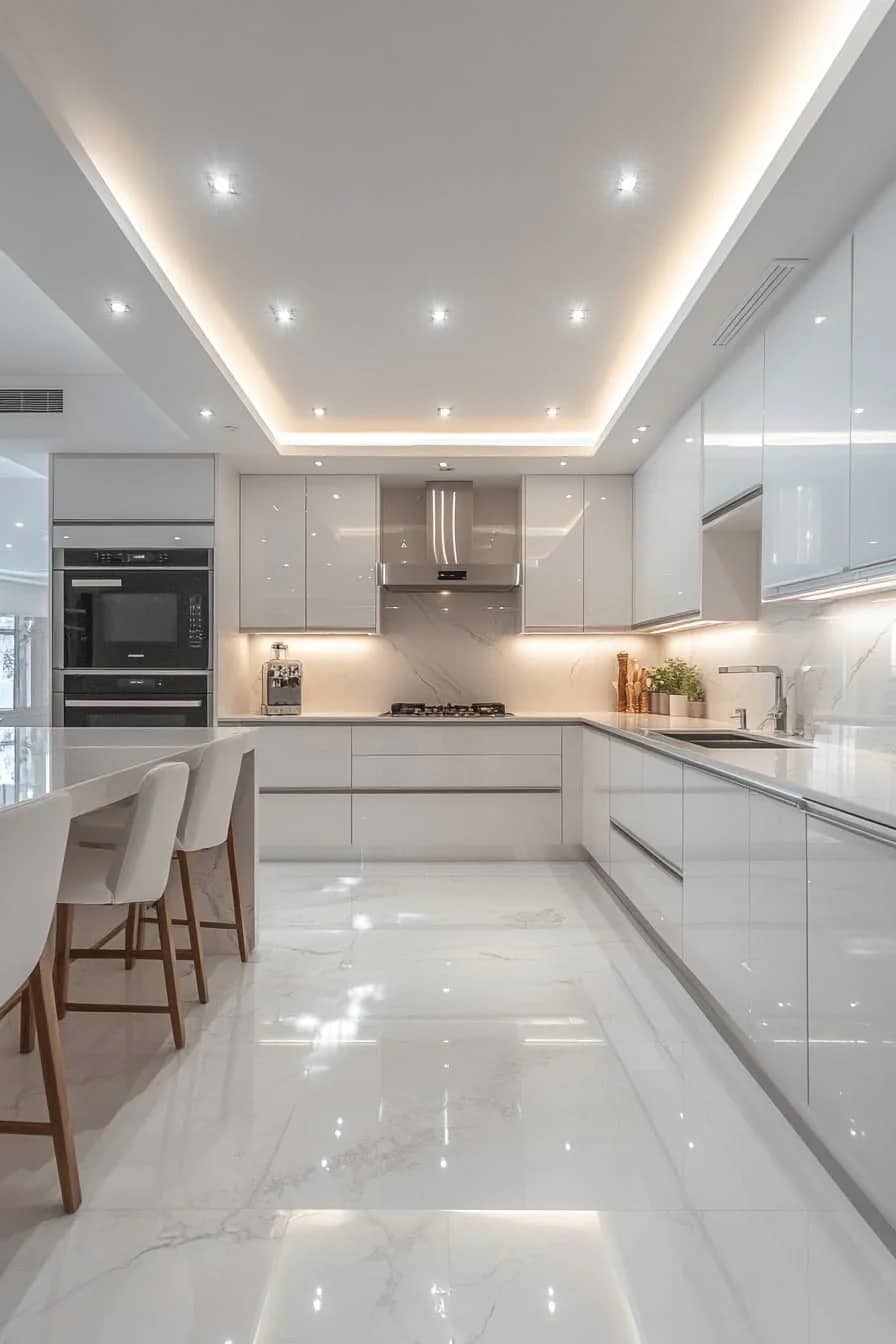
How should a kitchen and storage be planned?
Around what the household actually does: how it cooks, what it owns and what it uses every day. Layout and appliances come from that, and the hardware is chosen for years of daily use.
In a Hyderabad home
Plan around habits, not catalogues
A kitchen or wardrobe catalogue shows units. A good plan starts from how often and how much the household cooks, who cooks, what is bought in bulk, what has to stay out of sight, and what should be within reach every morning.
Before choosing any unit, list:
- the appliances you own now, and those you plan to buy
- daily cooking versus occasional heavy cooking, and whether a utility or second kitchen is needed
- what is stored in bulk: grains, oils, vessels, festive items
- clothes, bags and shoes per person, including seasonal clothing
- things that need a dedicated place: prayer items, documents, cleaning supplies, suitcases
The kitchen
The layout follows the sequence of work: storage, washing, preparation, cooking and serving, with as few steps as possible between them.
- Keep a clear stretch of counter between the sink and the hob for preparation.
- Plan heavy items in drawers at waist height rather than in deep base cabinets.
- Fix appliance positions before the electrical layout, so every appliance has its own correctly rated point.
- Plan the chimney duct route early, since it depends on the window and wall positions.
- Light the work surfaces directly with task lighting under the wall units.
Storage across the home
Storage works when every item has a place close to where it is used. Entrance storage holds shoes, keys, bags and umbrellas. Bedroom wardrobes are divided by what each person owns: hanging, folded, drawers and lofts for seasonal items. Living areas get closed storage for what makes a room look busy, with a few open shelves for what you want to see. Utility storage keeps cleaning equipment, laundry and bulk supplies out of the kitchen.
Hardware and materials
Joinery is used many times a day, so hardware matters as much as the finish.
- Soft-close hinges and full-extension channels make drawers usable to the back.
- Water resistance matters near sinks, in kitchens and in bathrooms, so choose boards and edges for those areas carefully.
- Matt and textured finishes hide fingerprints better than high gloss on handles and doors.
- Ask for the brand and grade of hinges, channels and boards in writing, and compare like with like.
In diagrams
Storage
Washing
Preparation
A clear stretch of counter between sink and hob.
Cooking
Serving
Entrance
Shoes, keys, bags and umbrellas.
Bedrooms
Wardrobes divided by what each person owns.
Living areas
Closed storage, with a few open shelves.
Utility
Cleaning equipment, laundry and bulk supplies.
When this does not hold, and what to check on site
When this does not hold
The work sequence is a guide, not a template. A household that cooks occasionally, or one that needs a utility or second kitchen, will plan differently from one that cooks every day. Storage is sized to what the household owns, so a list made room by room before design is more reliable than any rule of thumb.
What has to be checked on site
- wall straightness and floor levels, which affect how units fit
- plumbing inlet and outlet positions for the sink, dishwasher and washing machine
- the gas line route, and the window position for the chimney
- whether walls can take the weight of tall units and loft storage
What should be decided first when planning a kitchen?
How the household cooks, and which appliances it will use. Those decide the layout, the electrical points and the plumbing, which have to be fixed before units are made.
How much storage does a home need?
Enough for what the household actually owns, placed close to where each thing is used. Listing belongings room by room before design is the most reliable way to size it.
Does hardware really matter in kitchens and wardrobes?
Yes. Hinges and drawer channels are used many times a day. Good hardware keeps doors aligned and drawers smooth for years, so ask for the brand and grade in writing.