
How do you choose materials that age well?
Judge each surface by how it will be touched, cleaned and lit, and how it will look after years of use. Then see large samples in person, in the light where they will live.
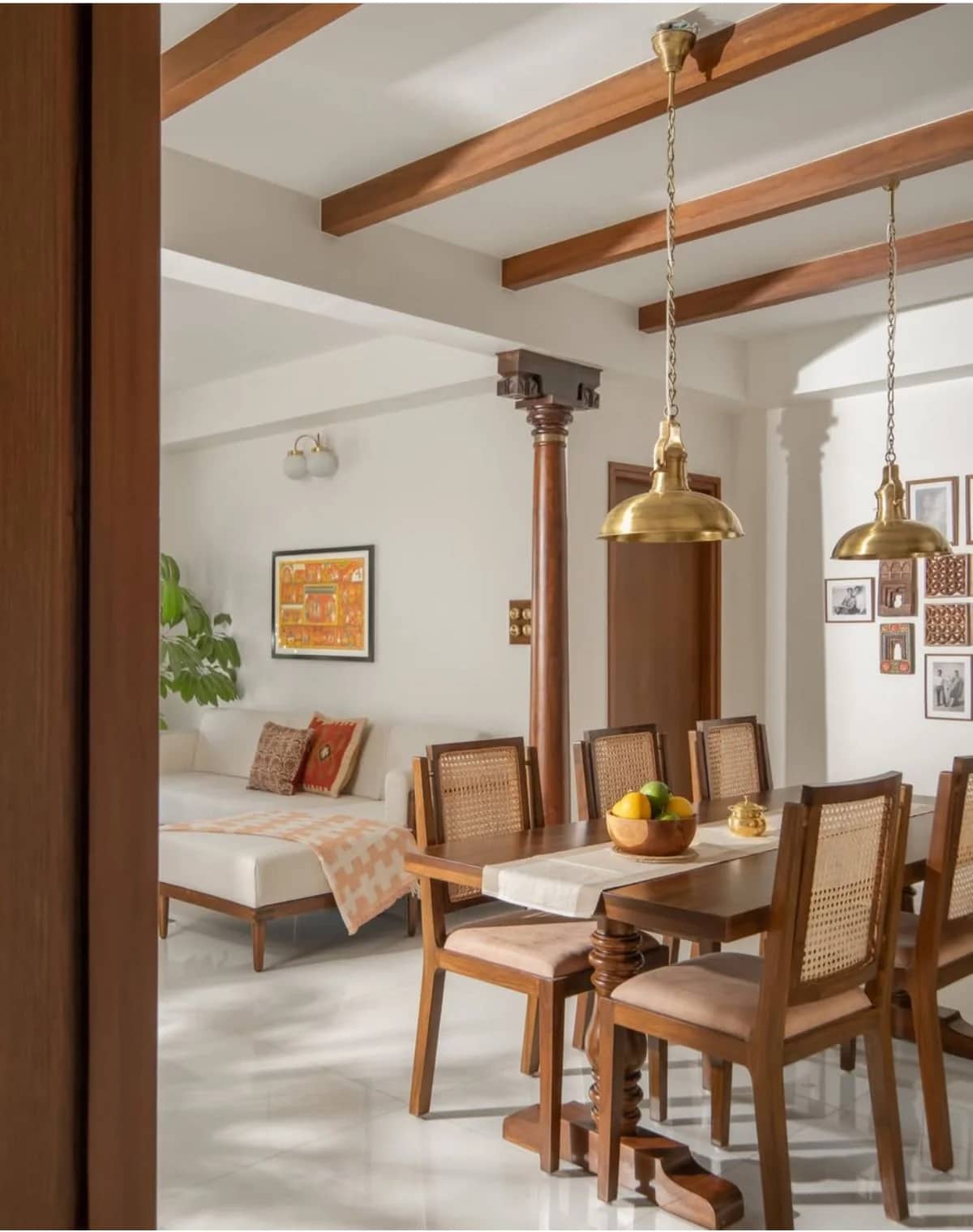
In a Hyderabad home
Judge a material by how it will be used
A material that looks right in a sample box can be wrong in a busy kitchen or a sunlit living room. Ask four questions of every surface:
- Touch. Will hands, feet or cooking vessels meet it every day?
- Cleaning. What will it be cleaned with, how often, and by whom?
- Light. Does it sit in strong daylight, in shade, or under artificial light at night?
- Ageing. Will it look better, the same or worse after five years of use?
Common surfaces and what to weigh
- Natural stone. Each slab is different, and many stones need sealing. Some marks become part of the character over time; others show as stains.
- Engineered stone and solid surfaces. More uniform and generally less porous, but check heat resistance near the hob.
- Wood veneers. Warm and natural, and they change colour with light over time. Best kept away from direct water.
- Laminates. Hard wearing and easy to clean, with a very wide choice of finishes. Edge quality decides how well they last.
- Painted and lacquered finishes. Smooth and seamless, but chips and scratches show on light colours and high gloss.
- Tiles. Hard wearing for floors and wet areas. Grout colour and joint width change how a floor reads as much as the tile itself.
Finish and maintenance
The same material behaves differently in different finishes. Gloss reflects light and shows fingerprints and scratches. Matt hides marks but can hold stains on light colours. Textured finishes add grip on floors and hide wear on doors. In rooms with strong afternoon sun, very glossy floors and counters can be uncomfortable to look across.
Ask for the cleaning instructions before you choose, not after. If a finish needs a special cleaner, periodic sealing or careful handling, decide whether the household will actually do that. A practical finish that is easy to look after usually stays more beautiful than a delicate one that is not.
In diagrams
One surface
Touch
Hands, feet or cooking vessels, every day?
Cleaning
With what, how often, and by whom?
Light
Strong daylight, shade, or artificial light at night?
Ageing
Better, the same or worse after five years?
See a large sample
Not a small chip.
Take it to the room
In daylight and at night.
See the stone itself
The slab, where possible, not a photograph of it.
Set the materials side by side
They are seen together in the home.
When this does not hold, and what to check on site
When this does not hold
No material is right everywhere. The same finish can suit one room and fail in the next, and a delicate surface can be the right choice if the household will look after it. Ask for the cleaning and sealing requirements of the specific material before choosing it.
What has to be seen in person
Photographs and screens change colour and hide texture. Before you finalise:
- see large samples, not small chips
- look at them in the room where they will be used, in daylight and at night
- see stone slabs themselves where possible, not only a photograph of a slab
- place the main materials side by side, since they are seen together in the home
The material guide compares common surfaces at a glance, and the Experience Center is set up for this kind of side-by-side review.
How do I choose materials that last?
Judge each surface by how it will be touched, cleaned and lit, and how it will age. A practical finish the household can look after usually outlasts a delicate one.
Why do materials look different at home than in a showroom?
Light changes how colour and texture read. Daylight direction, the colour of artificial light and neighbouring materials all shift the result, which is why large samples should be seen in the room itself.
Is natural stone hard to maintain?
It depends on the stone and where it is used. Many stones need sealing and care with acidic spills. Ask for the cleaning and sealing requirements of the specific stone before choosing it.